

Our Vision & Mission

OUR VISION
We envision a just and equitable world where the human rights of sex workers are respected.
We seek a world where the human rights of adult women, men, and transgender persons in sex work are respected. Where sex work is not criminalised, and every sex worker has the right to earn through providing sexual services, and to live with dignity– free from violence, exploitation, stigma, and discrimination.

OUR MISSION
Our mission is to ensure dignity and freedom for all sex workers.
We will challenge the myths, misconceptions, stigma, and discrimination that marginalise voluntary sex workers. We will enable participation and cooporation at all levels and power structures to create conditions that support the growth, safety, and prosperity of all sex workers.
Our History

OUR HISTORY
Coming Together
We identified the need for Me and My World first when sex workers took on the responsibility of implementing the State Government's HIV prevention programme. We did the work. The outreach, the education, the day-to-day labour of assisting people the health system could not reach — was up to us. All without recognition, and without our own basic human rights being addressed. We were relied upon as instruments of public health policy and left unprotected as people. That experience is what brought us together.
OUR HISTORY
Finding Our Voice
We formed MMW in 2017 as an organisation to engage with power structures at the state and bi-state level. We began by strengthening sex worker leadership through knowledge dissemination and capacity building. The point was to build the knowledge, skill, and standing to speak and be heard by those with structural power.
OUR HISTORY
Making Connections
We chose Women's Initiatives (WINS), an allied NGO in Tirupati, Andhra Pradesh, as our closest partner. WINS had been organising sex workers, migrant women, and HIV-positive women in Andhra Pradesh since 1994. WINS has provided ongoing training and support to MMW members on self-awareness, interpersonal relationships, violence mitigation, parenting, and savings. MMW members have benefitted from a special focus on the laws and treaties that govern our lives: India's Immoral Traffic (Prevention) Act (ITPA), the Universal Periodic Review, and the Convention on the Elimination of All Forms of Discrimination against Women (CEDAW).
OUR HISTORY
Fighting Stigma
Public discourse often claims to listen to sex workers. But in times of crisis, under police action, or when help is actually sought, that support disappears. Stigma, discrimination, and criminalisation deny sex workers dignity and rights. MMW uses every medium available to us to sensitise the public and the police to treat sex workers with dignity. We respond to changing laws and shifting public opinion by building awareness, documenting violations, and asserting our rights.
OUR HISTORY
Rejecting 'Rescue'
The heart of the problem is the “rescue” framework. Under the ITPA, increased focus on law enforcement conflates trafficking with voluntary sex work — treating a woman who chose this work and a woman who was forced into it as though they were the same person, with the same needs, and owed the same remedy. They are not the same. That conflation does not protect us. It puts consenting adults at greater risk: raided, detained, held in protective homes we never asked to enter, and separated from our families and our income in the name of saving us. MMW counters this by advocating for decriminalisation and for rights-based approaches that begin with what voluntary sex workers actually need.
OUR HISTORY
Reclaiming Rights
Our efforts, in concert with those of sex worker activists across the country, culminated in two judgments from India's Supreme Court: Budhadev Karmaskar (2022) and Prajwala (2026). Both affirmed that Indian law does not criminalise sex work, and that the police and the judiciary must respect the agency of sex workers rather than attempt to forcibly “rescue” or “rehabilitate” them.
Our Programs

PROGRAMS
COVID-19 Emergency Response (2020–21)
During the global COVID pandemic sex workers were unable to work and suffered greatly from loss of income. We mobilised to support each other with food distribution programs, Help Desks, and wage-loss mitigation advocacy.

Food Distribution
Distribution of rice and nutritious food to 1,000 sex worker members affected by COVID-19 via the COVID Support Rice Bank.
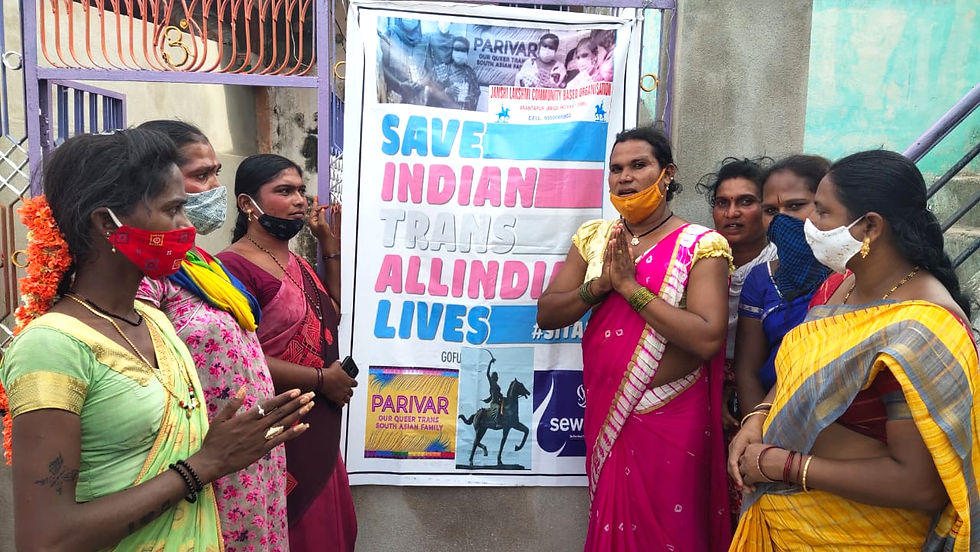
Ration Support for Trans Community
Cis and trans sister organisations collaborated during the pandemic to deliver food to the most marginalised communities in India: hijra, kothi, and other gender non-conforming identities.

Help Desks
Help Desks were established in 3 districts to assist in meeting urgent basic needs such as cooking stoves and propane.
Guntur District Report | Krishna District Report | West Godavari Report

COVID Relief Advocacy
Presentation to Dr. Kruthika Shukla, IAS, on implementation of the Supreme Court's relief orders and the G.O.Ms. directive, citing the Maharashtra precedent of ₹5,000 per month for three months.
PROGRAMS
Advocacy & Legal Rights
Advocacy and legal rights is the core of MMW's work. We meet with and educate government officials, local police, protective-home staff, and local community members on the rights that protect and the laws that negatively impact sex workers.

Government Advocacy
Sensitising government officials to the need to repeal the Immoral Traffic (Prevention) Act (ITPA) and provide sex workers labour rights.
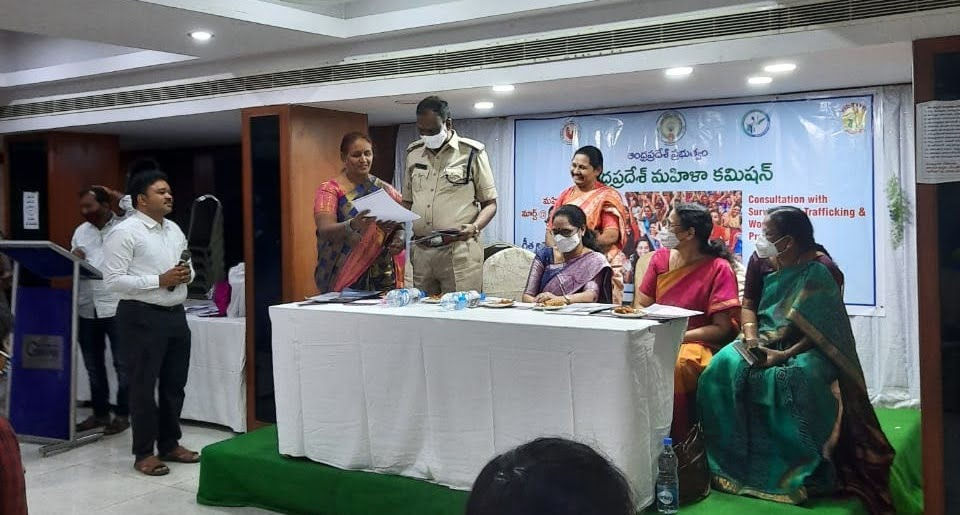
Police Advocacy
Sensitising police to treat sex workers with dignity and to apply the law correctly.

Shelter Advocacy
Engaging with protective homes and shelter staff on the rights of voluntary sex workers held unjustly as ‘victims of trafficking’ under the ITPA.

Amma Services
Engaging with protective homes and shelter staff on the rights of voluntary sex workers held unjustly as ‘victims of trafficking’ under the ITPA.

Groundless Framework
Information gathered under the Right to Information Act, used to educate and advocate for the community.

15,000
MEMBERS
8
DISTRICTS
5
PROGRAMS
PROGRAMS
Community Education & Mobilisation

100 Days Campaign
Community leaders from Ananthapur, West Godavari, Krishna, and Guntur met to work through the difference between illegal human trafficking and voluntary sex work.

World Human Rights Day
Educating the public on the rights of sex workers.

World AIDS Day
We meet annually to memorialise those who have died from HIV/AIDS and to continue strategizing how to end to the epidemic.